Five of the world's biggest environmental problems
These five megatrends present major global threats for planet
Earth - problems that must be solved if the world is to remain a supportive
habitat for humans and other species. DW looks at causes and possible
solutions.
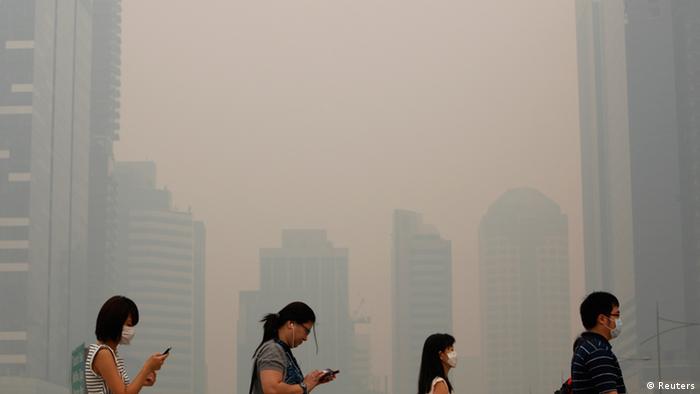
1. Air pollution and climate change.
Problem: Overloading of the atmosphere and of
ocean waters with carbon. Atmospheric CO2 absorbs and re-emits
infrared-wavelength radiation, leading to warmer air, soils, and ocean surface
waters - which is good: The planet would be frozen solid without this.
Unfortunately,
there's now too much carbon in the air. Burning of fossil fuels, deforestation
for agriculture, and industrial activities have pushed up atmospheric CO2
concentrations from 280 parts per million (ppm) 200 years ago, to about 400 ppm
today. That's an unprecedented rise, in both size and speed. The result: climate disruption.
Carbon
overloading is only one form of air pollution caused by burning coal, oil, gas
and wood. The World Health Organization recently estimated that one in nine deaths in 2012 were
attributable to diseases caused by carcinogens and other poisons in polluted
air.
Solutions: Replace fossil fuels with renewable
energy. Reforestation. Reduce emissions from agriculture. Change industrial
processes.
The
good news is that clean energy is abundant - it just needs to be harvested.
Many say a 100 percent renewable-energy future is
feasible with existing technology now.
But
the bad news is that even though renewable energy infrastructure - solar
panels, wind turbines, energy storage and distribution systems - are already
widespread, and getting cheaper and more efficient all the time, experts
say we're not applying them quickly enough to
prevent catastrophic climate disruption. Barriers in policy and finance remain
to be overcome.
Picture gallery: The big smog: Cities plagued by air
pollution

2. Deforestation.
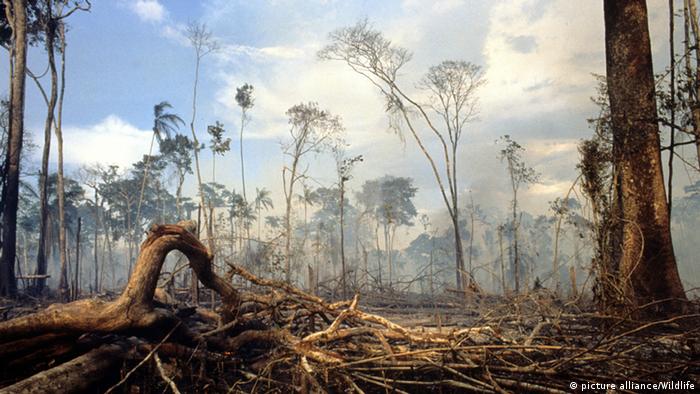
Problem: Species-rich wild forests are being destroyed, especially in the
tropics, often to make way for cattle ranching, soybean or palm oil
plantations, or other agricultural monocultures.
Today,
about 30 percent of the planet's land area is covered by forests - which is
about half as much as before agriculture got started around 11,000 years ago.
About 7.3 million hectares (18 million acres) of forest are destroyed each
year, mostly in the tropics. Tropical forests used to cover about 15 percent of
the planet's land area; they're now down to 6 or 7 percent. Much of this
remainder has been degraded by logging or burning.
Not
only do natural forests act as biodiversity reserves, they are also
carbon sinks, keeping carbon out of the atmosphere and oceans.
Solutions: Conserve of what's left of natural
forests, and restore degraded areas by replanting with native tree species.
This requires strong governance - but many tropical countries are still
developing, with increasing populations, uneven rule-of-law, and widespread
cronyism and bribery when it comes to allocating land use.
Picture gallery: Burning down the Amazon
3. Species extinction.
Problem: On land, wild animals are being hunted
to extinction for bushmeat, ivory, or "medicinal" products. At sea,
huge industrial fishing boats equipped with bottom-trawling or purse-seine nets
clean out entire fish populations. The loss and destruction of habitat are also
major factors contributing to a wave of extinction - unprecedented in that it
is caused by a single species: humans. The IUCN's Red List of threatened and
endangered species continues to grow.
Not
only do species inherently deserve to exist, they also provide products and
"services" essential to human survival. Think bees and their pollinating prowess -
necessary for growing food.
Solutions: Concerted efforts need to be made to
prevent further loss of biodiversity. Protecting and restoring habitats is one
side of this - protecting against poaching and wildlife trade is
another. This should be done in partnership with locals, so that wildlife
conservation is in their social and economic interest.
Picture gallery: Looming extinction crisis

4. Soil degradation.
Problem: Overgrazing, monoculture planting,
erosion, soil compaction, overexposure to pollutants, land-use conversion -
there's a long list of ways that soils are being damaged. About 12 million
hectares of farmland a year get seriously degraded, according to UN estimates.
Solutions: A wide range of soil conservation and
restoration techniques exist, from no-till agriculture to crop rotation to
water-retention through terrace-building. Given that food security depends on keeping soils in
good condition, we're likely master this challenge in the long run. Whether
this will be done in a way equitable to all people around the globe, remains an
open question.
Picture gallery: When the earth turns to dust

5. Overpopulation.
Problem: Human population continues to grow rapidly
worldwide. Humanity entered the 20th century with 1.6 billion people; right
now, we're about 7.5 billion. Estimates put us at nearly 10 billion by 2050.
Growing global populations, combined with growing affluence, is putting ever
greater pressure on essential natural resources, like water. Most of the growth is happening on
the African continent, and in southern and eastern Asia.
Solutions: Experience has shown that when women are
empowered to control their own reproduction, and gain access to education and basic social services,
the average number of births per woman drops precipitously.
Done
right, networked aid systems could bring women out of extreme poverty, even in
countries where state-level governance remains abysmal.
Picture gallery: Remember when we used just one
earth?


No comments:
Post a Comment