Tuesday, October 2, 2018

Air, food & water - Population Matters


Air, food and water are essential to all life. All are threatened by growing human numbers.

Air

Air pollution is an important example of the waste arising from unsustainable human consumption. It arises from multiple sources, including fossil fuel use, particularly coal and transport, livestock, and includes cooking fires in developing countries. Its consequences include premature deaths, particularly in cities, and the impact of climate change, including ocean acidification.


Air is essential to most life but often taken for granted.
Human activities do affect the quality of the air we breathe and hence our health. This is recognized and action has been taken to improve air quality by removing some known contaminants. Lead, for example, has been removed from petrol.
However, problems remain. Smoke from cooking fires affects the health of millions in developing countries, especially where habitations have insufficient ventilation. Fast growing cities, particularly in China, are affected by smog from coal-fired power stations. It was coal fires that were the cause of the notorious smog in London in the 1950s.
Many cities in the developed world have controlled the use of coal. However, their citizens are affected by motor vehicle emissions. The problem is worsened by continually increasing traffic jams.
More generally, carbon, methane and nitrous oxide emissions of all kinds — those from aircraft, manufacturing, farm animals, etc. — contribute to climate change and ocean acidification.

Food requirements

Ever more people need ever more food. We currently produce enough food to feed the seven billion people on the planet. Hitherto the main reasons that millions have remained malnourished have been where food is grown, how it is distributed, and the fact that many people are too poor to pay for it. This has led to a false sense of complacency. It is dangerous to assume that the world will continue indefinitely to be able to feed even its existing population, let alone the mid-range 30 per cent increase in numbers projected by the United Nations between 2010 and the middle of the century.


In 1960, there was enough land to sustain the world population on a modest European diet, around 0.5 ha of arable cropland per capita. This allowance has fallen by over half to 0.2 ha per capita because the population has doubled and soil degradation and erosion have increased. Humanity is already using most of the productive land, so the expected 1 – 4 billion additional people will have to be fed from more fragile and marginal soils. The more people there are, the harder it will be to feed them.

Food supplies

Our agriculture depends on high-yield crop variants supported by large inputs of energy, water and fertiliser, the latter in particular requiring high levels of fossil fuel input.
Basically, we live by turning oil and water into food. However, the high input levels required by our intensive monocultural approach are vulnerable in a world where fossil fuel resources are finite and water supplies are threatened by climate change, overextraction and increasing demand.

Food supplies are also vulnerable to plant disease, pests, falling soil fertility, desertification, urbanisation, changing weather patterns, rising sea levels and rising levels of salination as soils are overirrigated.
Fish stocks, another major contributor to global nutrition, are currently being overexploited worldwide by intensive industrial fishing practices.
Developed countries consume significantly more input-intensive meat and dairy products than developing countries but as developing countries industrialise, their consumption of these products will increase, putting further pressure on resources.
Our consumption is driving continued encroachment into the natural environment as more and more land is engulfed by agriculture to feed our growing numbers.
Read more about food.

Water

Ever more people need ever more water. Growing populations, changing consumption patterns and increasing industrialisation mean people are using ever more water.

However our supplies of fresh water, like other resources, are finite and under threat. Ground water is being depleted, and pollution is affecting many remaining fresh water supplies.
Climate change is already changing rainwater patterns with catastrophic consequences, and shrinking the glaciers which many millions of people rely on to provide water throughout the year.

Many communities, especially in the poorest regions, are already suffering severely from shortage of water. In some regions of Africa and Asia people have to walk more than six kilometres to collect safe drinking water.
Large-scale water extraction and distribution generally depend on energy resources which are themselves limited. Even the power generated by hydroelectric schemes is endangered by reduction and variability in rainfall.
Read more about water.


Causes: 

https://www.populationmatters.org/the-issue/environment/air-food-water/


Monday, October 1, 2018

Five of the world's biggest environmental problems


      Five of the world's biggest                       environmental problems     

These five megatrends present major global threats for planet Earth - problems that must be solved if the world is to remain a supportive habitat for humans and other species. DW looks at causes and possible solutions.


1. Air pollution and climate change.

Problem: Overloading of the atmosphere and of ocean waters with carbon. Atmospheric CO2 absorbs and re-emits infrared-wavelength radiation, leading to warmer air, soils, and ocean surface waters - which is good: The planet would be frozen solid without this.
Unfortunately, there's now too much carbon in the air. Burning of fossil fuels, deforestation for agriculture, and industrial activities have pushed up atmospheric CO2 concentrations from 280 parts per million (ppm) 200 years ago, to about 400 ppm today. That's an unprecedented rise, in both size and speed. The result: climate disruption.
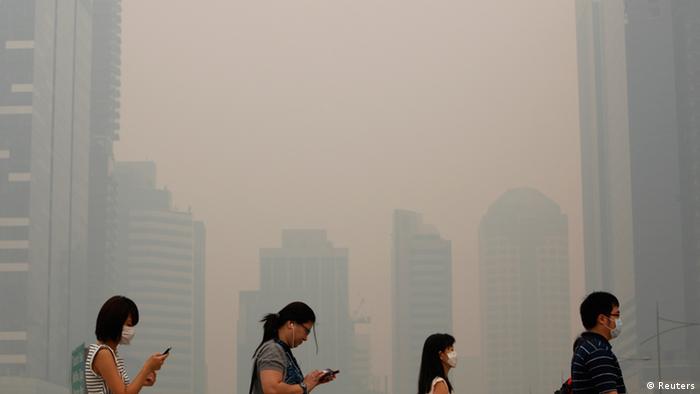
Carbon overloading is only one form of air pollution caused by burning coal, oil, gas and wood. The World Health Organization recently estimated that one in nine deaths in 2012 were attributable to diseases caused by carcinogens and other poisons in polluted air.
Solutions: Replace fossil fuels with renewable energy. Reforestation. Reduce emissions from agriculture. Change industrial processes.
The good news is that clean energy is abundant - it just needs to be harvested. Many say a 100 percent renewable-energy future is feasible with existing technology now.
But the bad news is that even though renewable energy infrastructure - solar panels, wind turbines, energy storage and distribution systems - are already widespread, and getting cheaper and more efficient all the time, experts say we're not applying them quickly enough to prevent catastrophic climate disruption. Barriers in policy and finance remain to be overcome.
Picture gallery: The big smog: Cities plagued by air pollution


2. Deforestation.

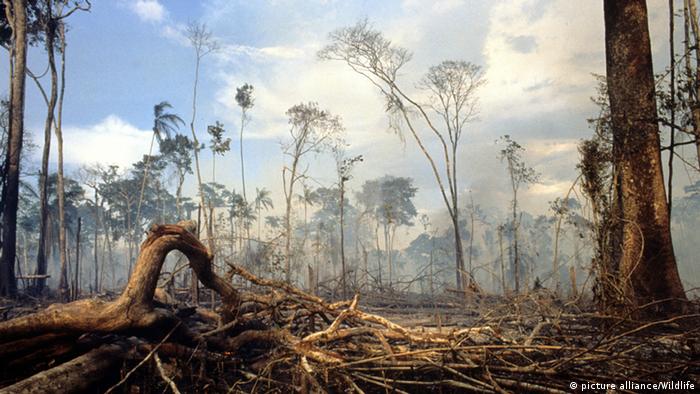
Problem: Species-rich wild forests are being destroyed, especially in the tropics, often to make way for cattle ranching, soybean or palm oil plantations, or other agricultural monocultures.
Today, about 30 percent of the planet's land area is covered by forests - which is about half as much as before agriculture got started around 11,000 years ago. About 7.3 million hectares (18 million acres) of forest are destroyed each year, mostly in the tropics. Tropical forests used to cover about 15 percent of the planet's land area; they're now down to 6 or 7 percent. Much of this remainder has been degraded by  logging or burning.
Not only do natural forests act as biodiversity reserves, they are also carbon sinks, keeping carbon out of the atmosphere and oceans.
Solutions: Conserve of what's left of natural forests, and restore degraded areas by replanting with native tree species. This requires strong governance - but many tropical countries are still developing, with increasing populations, uneven rule-of-law, and widespread cronyism and bribery when it comes to allocating land use.
Picture gallery: Burning down the Amazon


3. Species extinction.


Problem: On land, wild animals are being hunted to extinction for bushmeat, ivory, or "medicinal" products. At sea, huge industrial fishing boats equipped with bottom-trawling or purse-seine nets clean out entire fish populations. The loss and destruction of habitat are also major factors contributing to a wave of extinction - unprecedented in that it is caused by a single species: humans. The IUCN's Red List of threatened and endangered species continues to grow.
Not only do species inherently deserve to exist, they also provide products and "services" essential to human survival. Think bees and their pollinating prowess - necessary for growing food.
Solutions: Concerted efforts need to be made to prevent further loss of biodiversity. Protecting and restoring habitats is one side of this - protecting against poaching and wildlife trade is another. This should be done in partnership with locals, so that wildlife conservation is in their social and economic interest.
Picture gallery: Looming extinction crisis 

4. Soil degradation.

Problem: Overgrazing, monoculture planting, erosion, soil compaction, overexposure to pollutants, land-use conversion - there's a long list of ways that soils are being damaged. About 12 million hectares of farmland a year get seriously degraded, according to UN estimates.
Solutions: A wide range of soil conservation and restoration techniques exist, from no-till agriculture to crop rotation to water-retention through terrace-building. Given that food security depends on keeping soils in good condition, we're likely master this challenge in the long run. Whether this will be done in a way equitable to all people around the globe, remains an open question.
Picture gallery: When the earth turns to dust​​​​​​​


5. Overpopulation.

Problem: Human population continues to grow rapidly worldwide. Humanity entered the 20th century with 1.6 billion people; right now, we're about 7.5 billion. Estimates put us at nearly 10 billion by 2050. Growing global populations, combined with growing affluence, is putting ever greater pressure on essential natural resources, like water. Most of the growth is happening on the African continent, and in southern and eastern Asia.
Solutions: Experience has shown that when women are empowered to control their own reproduction, and gain access to education and basic social services, the average number of births per woman drops precipitously.
Done right, networked aid systems could bring women out of extreme poverty, even in countries where state-level governance remains abysmal.
Picture gallery: Remember when we used just one earth?


Causes:

https://www.dw.com/en/five-of-the-worlds-biggest-environmental-problems/a-35915705


What is Environmental Pollution?


What is Environmental Pollution?

Pollution is the contamination of the environment by introduction of contaminants that can cause damage to environment and harm or discomfort to humans or other living species. It is the addition of another form of any substance or form of energy to the environment at a rate faster than the environment can accommodate it by dispersion, bEnvironmental pollution is one the greatest challenges that the world is facing today. It began since industrial revolution, increasing day by day and causing irreparable damage to Mother Earth. Environmental pollution has its own causes, effects and solutions. Looking into these will help you identify the causes and what steps you can take to mitigate those effects. Broadly, environmental pollution consists of six basic types of pollution, i.e. air, water, land, soil, noise, and light.reakdown, recycling, or storage in some harmless form.

When people think of environmental pollution, most focus on fossil fuel and carbon emissions, but there are different contributing factors. Chemical pollution in bodies of water contributes to illnesses. Electromagnetic pollution has effects on human health but is uncommonly considered in present times despite the fact we essentially expose ourselves to it on a daily basis. Taking a look at causes and effects of environmental pollution will pull any mind on a rapid downward spiral. Solutions are in the works and, if we work together across the world, there is hope remaining, at least for the time being.
The environment will continue to deteriorate until pollution practices are abandoned.
~ B. F. Skinner

Causes of Environmental Pollution

·         Pollution from cars, trucks, and other vehicles is and has been our major environmental pollution issue for almost a century now. The problem is we did not realize this until the problem had manifested to monumental proportions.
·         Fossil fuel emissions from power plants which burn coal as fuel contributed heavily, along with vehicles burning fossil fuels, to the production of smog. Smog is the result of fossil fuel combustion combined with sunlight and heat. The result is a toxic gas which now surrounds our once pristine planet. This is known as “ozone smog” and means we have more problems down here than we do in the sky.
·         Carbon dioxide is another product from all of the vehicles on the planet as well as unreformed power plants and other industrial facilities. A continually growing population of humans and clear cutting of forests has exacerbated this problem so natural defenses are no longer present and carbon dioxide levels are on the rise.
·         Water pollution is a major issue. Many industries dump wastes into rivers, lakes, ponds, and streams in an attempt to hide wastes from EPA inspectors. These water sources feed major crops and food becomes contaminated with a variety of chemicals and bacteria, causing rampant health problems.
·         Radiation comes into play as well. This is an exceedingly nasty pollution issue and requires extensive description. Primarily, there is radiation from the sun. As the natural ozone layer around the Earth has become depleted. The sun is wonderful, but the only reason we are able to survive on this planet so close to the sun is due to the fact of natural shielding against solar radiation. As the protective ozone layer around the planet has become thinner, ultraviolet radiation has risen significantly, causing increases in skin cancers and other types of cancer in all countries, killing millions of people every year.
·         More radiation is a problem. The sun shining brightly on a naked planet is not the only source of radiation we are exposed to. Electromagnetic radiation is another insidious culprit. Once upon a time, the major concern around this type of radiation was due to high tension wires which carry huge amounts of electricity to cities. Now, we even carry sources of this radiation with us as cell phones, laptops, tablets and other wireless devices.

Effects of Environmental Pollution

·         The polluting gases mentioned above have an interesting effect on climate. Essentially, these gases form a veil around the planet which holds heat in, increasing the overall temperature of the planet. The rise in planetary temperature, or global warming, is not immediately noticeable. However, even a rise of a few degrees Centigrade causes catastrophic changes in weather. This is happening now.
·         Pollen has increased. It is ironic, but even with fewer trees in the world; the increase of carbon dioxide emissions induces plants such as ragweed and many trees to produce more pollen than ever before. This has resulted in rampant allergies across the world, affecting the health of billions of people.
·         One of the solutions to tamp out carbon monoxide emissions from coal burning power plants was and still is to use radioactive power plants. While this does cut down on gas emissions significantly, there is radioactive waste which causes various cancers to bloom in major cities and small towns all around while destroying ecosystems entirely.
·         Global temperature has risen significantly over the years. The protective atmosphere is further being polluted by methane gas released from melting icecaps. This is causing rampant weather issues around the planet.
This all seems like a fairly bleak outlook for the planet and all the creatures on it. It is, in fact, a load of dark and very real truth. For much of it, there is little turning back. Being realistic, though solutions are in the works to combat global warming, the hope is dim. Radiation does not go away quickly either, especially in a technological age requiring more power, more gas, and intensified depletion of protective gases around the planet. We are on a significant downhill snowball ride to hell. There are things we can do. Let us take a look at some of the solutions which are currently being implemented to reduce pollution.

Solutions to Environmental Pollution

·         Gas emission pollution is being mitigated in a variety of ways with car emission control, electric and hybrid vehicles and public transportation systems. Not all major cities have successful implementation and decent public transportation in place, but the world is working on this issue constantly and we have managed to reduce emissions profoundly over the last decade. There is much catching up to do.
·         The cost of radioactive power plants is becoming apparent and the days of coal power plants are nearly dead. The radiation is a serious issue. Radioactive leakage from power plants and nuclear testing have already contaminated oceanic life to such a degree that it will take hundreds of years to return to normal. More radiation solutions are in the works with various ecologically friendly power technologiesbeing built every day.
·         Solar power is a fantastic solution. Now that solar radiation is at a climactic peak, we can reap power from the sun using solar panel systems. These range from home systems to larger scale systems powering entire communities and cities.
·         Wind power is coming into play. This may not seem like much at first, but when you get about 100 feet off the ground, there is a great deal of wind up there. By building wind turbines to harvest natural wind energy, electricity is produced. Wind turbine power and solar power are both powerful forces against fossil fuel power and radioactive power. The one problem here is power companies. They want to stay with radioactive power plants because they actually can’t be removed. It has become the crusades of many individuals and small corporations to make the switch and there are plenty of people following this as populations cry out for help.
  • Electromagnetic radiation (ER) reduction. Once major manufacturers of computers and electronic devices realized the blatant potential for huge ER emissions directly into the eyes and brains of users, they started to implement hardware protocols to minimize risks and reduce ER production significantly. Newer devices are in the lead to knock this problem out and, fortunately, this is working.
Also, the Environmental Protection Agency (EPA) is well aware of all leaks and tricks industries are using to dump wastes. This agency now has extremely strict protocols and testing procedures implemented against such facilities so populations are not affected. Additionally, the EPA is measuring air pollution and implementing regulatory procedures for vehicle emissions. They also monitor pollen issues and, with the help of the Centers for Disease Control (CDC), they implement solutions to reduce pollen in the air.
Dropping pollen counts is a major focus for EPA and CDC activities. Asthma and other allergic conditions are flooding medical care facilities and pharmaceutical companies with serious public health problems. The response has been swift and various methods to control emissions and reduce pollen counts are in the works. Children and elderly people are at the highest risk for environmental pollution related health problems. The good news is we are directly on the horizon to cut down the causes and risks while providing practical health solutions for the general public throughout the world.

Causes:


https://www.eartheclipse.com/environment/causes-effects-solutions-to-environmental-pollution.html